Pulse XE Reviews: See Why 0 Shoppers Rated It 0 Stars!
Everyone’s got opinions. We collected 0 of them to see if the Pulse XE 3d printer really earns that 0/5 rating.
 Supermod
  Moderator
 Recaptor
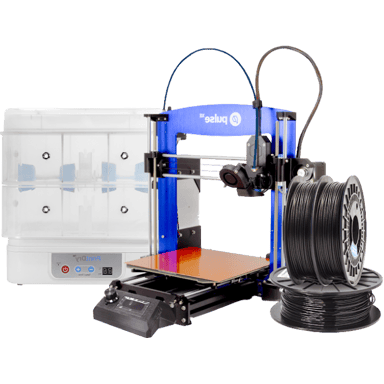
 Pulse XE: A Professional FDM 3D Printer Built for Precision and Versatility
When it comes to professional-grade 3D printing, the Pulse XE stakes its claim as a reliable and capable FDM/FFF printer designed specifically for engineering and prototyping applications. Released in 2018, this USA-made 3D printer targets professionals who demand accuracy, material compatibility, and an upgrade-friendly platform. On paper, the Pulse XE impresses with a solid build volume and a wide filament repertoire, making it a versatile choice for those seeking performance grounded in measurable specs and practical features. But does it really live up to its numbers in a competitive market?
Detailed Specs & Features of Pulse XE
Looking closely at the build volume, the Pulse XE offers a 10 x 9 x 8.5-inch workspace, which translates to a total of 676 cubic inches of printable area. This is substantial for many professional needs, allowing medium-sized parts to be crafted without splitting or assembly. The printer operates within a standard 100-240 Volt range with a stated 500-watt power consumption during operation; fairly typical for high precision FDM machines, and just 10 watts on idle, signaling moderate energy efficiency.
Its extruder system features a single Bowden drive with a hotend capable of reaching 572°F, suitable for demanding engineering materials like Nylon, Carbon-filled, and Polycarbonate. With a standard 0.4 mm nozzle and several optional nozzle diameters from 0.2 to 0.8 mm, users can tailor print resolution and speed according to their project's demands.
The build plate supports PEI spring sheets that are removable, and auto bed leveling is integrated, which simplifies setup and improves first-layer consistency. On the connectivity front, it supports USB and SD card transfers but omits remote monitoring or cloud capabilities, keeping it fairly traditional in workflow. The system requires proprietary software but is compatible with popular slicers like Cura and PrusaSlicer, contributing to flexibility in print preparation.
User Experience & Performance (Based on Specs)
Design & Build
The Pulse XE's Cartesian frame and open enclosure typify professional FDM printers, emphasizing accessibility and straightforward maintenance. It occupies a footprint of roughly 21 x 23.25 x 19 inches, with a package weight of around 30 pounds, which is manageable for a professional office or small workshop. Notably, assembly is unnecessary as it ships prebuilt, reducing setup friction.
Performance
Performance-wise, the printer's specs indicate an official max print speed of 200 mm/s, though real-world effective speed averages around 60 mm/s, pointing to a balanced approach between speed and quality. The print accuracy is rated at 50 microns, which aligns with high precision expectations in prototyping environments. Reliability shines through with a quoted 95% print success rate and a continuous print duration capability of 72 hours, making it robust for long, uninterrupted jobs. Features such as spaghetti/fault detection and print recovery after power interruptions add layers of confidence in practical settings.
Materials & Compatibility
One of the Pulse XE's most notable strengths is its broad compatibility with an extensive range of filaments. It supports over twenty filament types, including ABS, TPU, Nylon, flexible materials, and even metal and carbon-filled composites. This diversity, paired with a max extruder temperature of 572°F and a heated bed capable of 239°F, allows users to push boundaries on functional prototypes. That said, it requires filament drying beforehand and only supports single-material printing, which might limit some advanced multi-material workflows.
Extra Features
Safety isn't overlooked, with multiple certifications: CE, FCC, RoHS, and several safety sensors incorporated. The printer includes features like overheat protection and auto shutdown on error, reassuring users about operational risks. While the lack of a touchscreen and built-in camera might feel dated, the 2.8-inch display and essential firmware update support keep it functional and user-friendly.
Pros & Cons
Pros
- Wide materials compatibility
- High-temperature extruder suitable for engineering materials
- Reliable print success rate and fault recovery
- Prebuilt and easy to set up
Cons
- No multi-material or dual extruder support
- Limited to basic connectivity, no remote control features
- Lack of a built-in camera and touchscreen display
Price & Value for Money
With a listed price of $1818 at MatterHackers, the Pulse XE sits comfortably within the mid-range bracket for professional 3D printers. Given its 1-year warranty and advanced power supply voltage flexibility, this price reflects a solid balance of features and reliability. For professionals needing a specialized setup for engineering plastics and carbon composites without the complexities or costs of multi-material systems, the Pulse XE provides measurable value without overspending on superfluous extras.
Quick Take
In short, the Pulse XE delivers a dependable platform for professional prototyping, with an emphasis on material compatibility and print accuracy that outpaces many peers in its price range. Its straightforward, no-frills design is both a strength and a limitation, depending on your need for connectivity or multi-material printing.
Closing Recommendation
The Pulse XE may be ideal for professionals focusing on functional prototypes and advanced material usage who value dependable performance and easy setup. It appears to perform best for single-material prints requiring high heat and precision, helping users achieve consistent results without needing extensive upgrades immediately. Those requiring cutting-edge remote functionality or dual extrusion might look elsewhere, but its solid foundational specs make it a trustworthy asset for many print shops.
Verdict
Rating: Based on the specifications and overall feature set, we believe Pulse XE deserves 4.2 out of 5.
- Winner Feature => Broad material compatibility and a high-temperature extruder capable of handling professional-grade filaments.
- Needs Improvement => Limited connectivity options and lack of multi-material or dual-extruder support for advanced workflows.
Reviews 0
The good, the bad, and the brutally honest.Average Rating


More 3D Printers 453
Unlock more awesome finds.